
Introduction
Every Thursday, traders around the world tune in for one key number: the U.S. natural gas inventories report by the Energy Information Administration (EIA), which tracks the levels of natural gas in US storage. It’s a small data point with big consequences—capable of moving prices, shifting investor sentiment, and signaling where the market might head next.
For new investors, understanding the natural gas storage impact is just as important as tracking production forecasts or weather models. Storage sits at the center of the natural gas ecosystem which balances the mismatch between constant production and highly seasonal demand.
This article breaks down why storage levels move markets, how they connect the U.S. to global energy flows, and how smart investors use storage data to make informed decisions.
Why Storage Matters for Natural Gas Prices
Natural gas prices depend on levels of supply and demand, and storage acts as the bridge between the two.
Natural gas demand peaks seasonally, based on weather cycles. However, production and pipeline imports are almost constant throughout the year. During warmer months, when demand for heating is low, producers inject gas into underground storage. In colder months, that stored gas is withdrawn to meet higher consumption. These injection and withdrawal cycles are central to how the market functions.
When storage levels are high, traders interpret it as a signal of oversupply, often leading to lower spot and futures prices. Conversely, low storage can trigger fears of shortages—especially ahead of winter—pushing prices higher.
This cyclical nature resembles the factors driving crude oil prices, where predicted supply-demand imbalances create market volatility, but natural gas responds to storage far more immediately due to its limited above-ground storage options.
The U.S. Natural Gas Storage System and Types
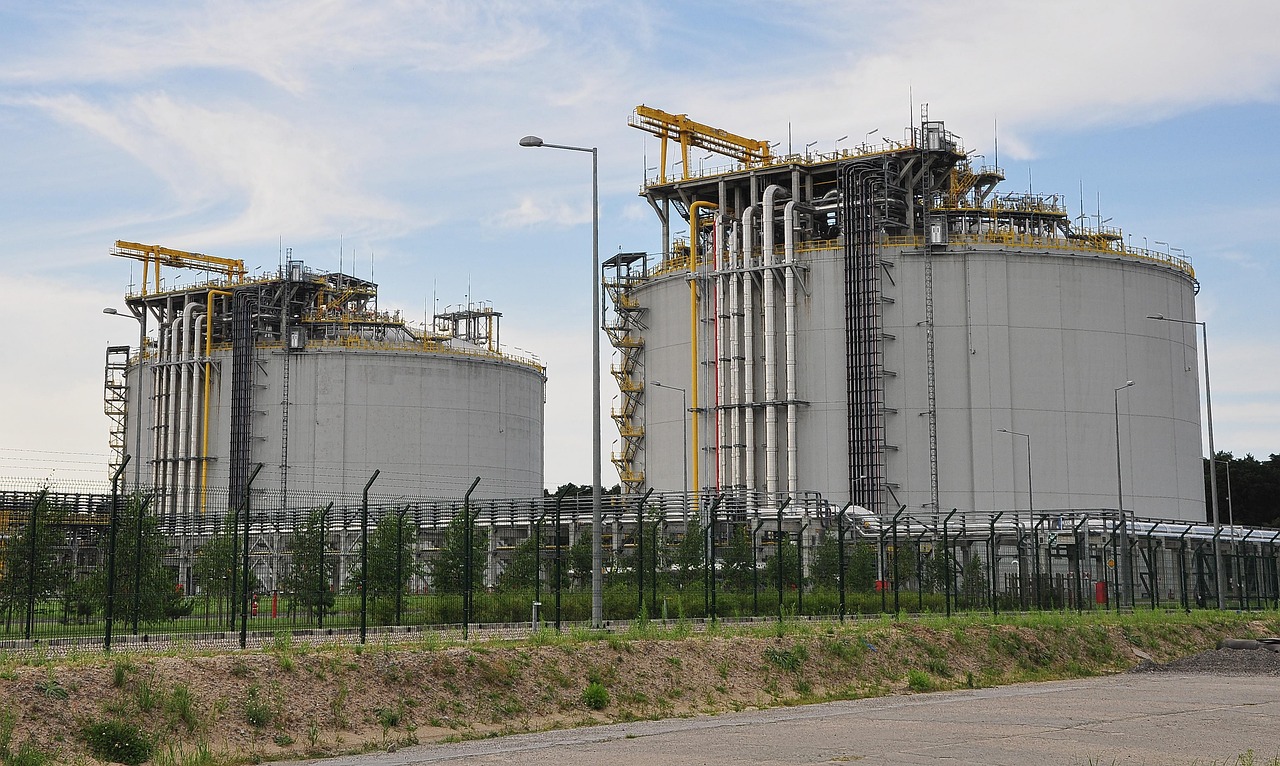
The United States operates one of the most sophisticated natural gas storage networks in the world. Most storage sites are strategically located near consumption hubs and pipeline systems.
The three main types of underground storage used across the US include:
-
Depleted gas reservoirs: This is the most common type of storage, where depleted gas or oil fields are converted into storage facilities, typically near consumption centers. This facility offers large capacity, existing infrastructure such as pipeline connections, and high availability.
-
Aquifers: These are porous, water-bearing sedimentary rock formations overlaid by impermeable cap rock suitable for seasonal storage. Aquifers generally require more cushion gas storage and monitoring.
-
Salt caverns: Man-made cavities in salt formations allow rapid injection and withdrawal. While more costly to develop, these facilities have very low base gas requirements and are ideal for short-term balancing.

The Energy Information Administration (EIA) publishes weekly storage updates that break down inventories on a national basis, as well as for the East, West, and producing regions. Traders watch these numbers closely to assess how close inventories are to five-year averages—a benchmark for gauging whether supply is tight or loose.
Because natural gas can’t be easily stored above ground, these underground inventories play a major role in stabilizing prices and ensuring a steady supply during weather swings.
Storage as a Signal for Investors
For investors, storage data is more than just technical information. It’s a sentiment signal to market directions.
-
High storage levels often point to weak demand or oversupply, putting downward pressure on prices.
-
Low storage levels suggest potential shortages, often driving prices and energy equities higher.
For instance, in late 2022, lower-than-expected U.S. storage levels, combined with rising European demand after supply disruptions, led to a sharp rise in natural gas futures. Conversely, warmer weather and increased storage inventories in mid-2023 brought prices back down, despite ongoing LNG exports.
Understanding these patterns helps investors anticipate potential price movements rather than reacting to them.
Global Impacts of U.S. Natural Gas Storage Levels
U.S. natural gas markets are not isolated numbers in the energy market. The expansion of liquefied natural gas (LNG) exports has linked U.S. storage to global energy dynamics.
When storage levels in the U.S. fall, less gas is available for export, tightening global supply and raising prices in importing countries—especially in Europe and Asia. Conversely, when U.S. inventories rise, it can relieve global markets due to an increase in available export volumes.
Europe’s storage levels, particularly during winter, also feed back into U.S. prices. If Europe’s gas inventories are low, global LNG demand spikes, leading to higher American exports and tightening domestic supply.
How to Invest in Natural Gas Based on Storage Data
1. Watch Weekly EIA Storage Reports
Every Thursday at 10:30 a.m. ET, the EIA releases its weekly storage report. Monitoring storage and supply through these reports and comparing the data to analyst forecasts can help investors understand patterns and price movements.
2. Use ETFs and Futures Linked to Storage Expectations
Exchange-traded funds (ETFs) such as the United States Natural Gas Fund (UNG) or futures contracts on the NYMEX track natural gas prices that react directly to storage trends. Buying or shorting these instruments based on storage forecasts can be a good way to gain natural gas exposure.
3. Invest in Companies Sensitive to Gas Prices
Producers, pipeline operators, and LNG exporters all feel the effects of storage-driven price swings. Many natural gas producers also appear in broader shale oil overview, since U.S. shale formations yield both oil and natural gas.

Why Storage Data Alone Can Be Misleading
While storage data is valuable, it’s not foolproof. Several factors can disrupt expected trends:
-
Weather unpredictability – Warm winters or cooler summers can upend demand forecasts as the need for heating energy is impacted by weather patterns.
-
Policy changes – Export regulations, environmental rules, or drilling restrictions may alter supply dynamics.
-
Infrastructure Blockages – Pipeline outages or LNG terminal disruptions can skew storage balances.
Storage data can be a key metric for investors; however, it is most effective when used alongside broader market analysis, including production rates, international demand, and long-term energy policy.
Long-Term Role of Storage in Gas Investment Strategy
As global energy systems evolve, natural gas storage is gaining a new kind of importance.
The rise of LNG exports means U.S. storage now supports not just domestic stability but global energy security. However, the increasing role of renewables and battery storage could reduce reliance on gas over time, especially as wind and solar become more cost-competitive.
Still, due to its cleaner-burning profile, natural gas is expected to remain a vital “bridge fuel” for decades. For investors, that means storage levels will continue to serve as a leading indicator for short- and medium-term opportunities.
Conclusion
Natural gas storage sits at the heart of global energy pricing. It not only balances supply and demand in the U.S. but also influences markets from London to Tokyo.
For anyone learning how to invest in natural gas, understanding storage data offers a real advantage to help anticipate market shifts, identify mispricing, and make smarter, data-driven decisions.
FAQs
How often is natural gas storage data released?
The EIA releases inventory reports weekly, on Wed mornings at 10:30 a.m. ET.
Why do prices sometimes rise even if storage is full?
Apart from storage data, trade prices can also be dependent on future expectations and analyst predictions. If the market anticipates a cold winter or higher LNG exports, prices can rise even with full storage.
Can individual investors trade based on storage reports?
Yes, individuals can invest through natural gas ETFs, futures contracts, or energy company stocks based on storage data reports. However, it’s best to combine storage data with broader market analysis.
How does U.S. storage compare to Europe or Asia?
The U.S. has far greater storage capacity relative to consumption, which stabilizes prices. Europe and Asia rely more on imports and have limited storage, making them more exposed to volatility.