
Introduction
Texas has long been the heartbeat of the U.S. oil and gas industry. From the deep plays of the Permian Basin to the productive Eagle Ford Shale, the Lone Star State remains at the centre of American energy production. For investors, that means access to tangible assets, longstanding infrastructure, and in many cases tax advantages you won’t find elsewhere.
Despite talk of energy transition and green alternatives, oil demand is far from disappearing. The state recently reported crude-oil production of over 121 million barrels in April 2025 (averaging about 4.06 million barrels per day) from some 159,160 oil wells. Global consumption continues to rise, infrastructure in Texas is well-established, and decades of geological data give investors more ability to evaluate risk versus reward. For accredited investors in particular, benefits of direct participation, royalty income, and other meaningful tax benefits are offered in some projects.
In this guide we’ll walk through the different types of oil-well investment opportunities in Texas, how the financial mechanics and tax benefits work, what you need to evaluate before putting in money, and a practical step-by-step on how to get started.
Types of Oil Well Investment Opportunities in Texas
There’s no one “right” way to invest in Texas oil wells. The right structure depends on investor goals, capital size, and risk tolerance. Below are the main forms you’ll encounter.
Working Interest (or Participating Interest)
With a working interest you own a direct stake in a well or drilling project. You share both profits and costs, including drilling, completion, and operating expenses. Once oil (or gas) is sold, you receive a share of the net revenue after deduction of royalties and costs.
For example, if a property has a royalty interest of 20 % and you hold a 100 % working interest of the remaining 80 %, you’d cover the full cost of drilling and operations beyond the royalty obligation and retain the full 80 % of net production revenue (and any downside risk).
This structure offers the highest potential returns, particularly when the well performs above expectations. You also can access tax deductions linked to direct capital costs (more on this in the tax section).
Mineral and Royalty Interests
With a royalty interest, you own rights to a share of production revenue without paying drilling or operating costs. You simply collect a percentage of the oil or gas sold from your land or interest. For example, many Texas royalties fall in the 12 %–25 % range.
Mineral interests give you the right to lease your minerals and/or receive royalties; you don’t handle drilling operations. Typically, royalty investors see steadier income but lower upside (compared to working-interest holders) and less risk of cost overruns.
One extra benefit: royalty owners are usually “paid off the top” (i.e., they receive their share before many operating costs are deducted) according to the lease terms.
Production Acquisitions (Existing Wells)
Rather than drilling new wells, some investors buy into wells already producing. That means you acquire cash-flow rather than speculative upside. Operators may allow buy-ins or partnerships into proven production assets. This approach tends to offer more predictable income and lower geological risk.
Development and In-Field Drilling (PUDs / Proven Undeveloped)
With these you invest in expansions of production in an existing field, either additional wells within known acreage or development of proved reserves (PUDs). Since infrastructure is already in place (in many cases) and geology is less speculative than “wildcat” drills, risk is somewhat lower, but higher than pure production acquisitions.
Non-Operating Partnerships
If you prefer a more passive stance, you can join a non-operating partnership: you invest capital, someone else (the operator) handles drilling, completion, production, and management. You receive your share of revenue according to agreement. This structure offers exposure to oil production with less day-to-day involvement.

Financial Mechanics: Returns, Cash Flow & Oil Wells Tax Advantages
Oil well investment opportunities generate returns primarily through production revenue. Here’s what new investors should understand about the financial side.
Revenue Streams and Cash‐Flow Timing
When a well begins producing, oil (and/or gas) is sold to a refiner, pipeline or trader. Revenue is distributed to stakeholders: royalty owners are paid first (depending on lease terms), then working interest holders share revenue after expenses. Cash flows commonly arrive monthly or quarterly.
Production, though, depends on multiple variables: well productivity (initial production rate), commodity prices (which fluctuate), decline curves (wells typically drop output over time). Producing wells may generate income immediately. But new drilling projects may take months (sometimes a year or more) before meaningful returns begin.
Upfront and Ongoing Costs
For working interest investors: you’ll typically pay your share of drilling and completion costs, and ongoing operating costs (maintenance, lifting, etc.). For mineral/royalty owners: you typically do not pay these costs. Because of this difference, working interest opportunities tend to have greater upside, but also more upfront capital and risk.
Return Profiles and Metrics
Operators and investment promoters often provide projections based on key metrics:
-
Internal Rate of Return (IRR)
-
Estimated Ultimate Recovery (EUR) — total expected production from the well or lease
-
Payback period — how long until your initial investment is recovered
These projections are only as good as their underlying assumptions (geology, price, operating cost, decline rates). Firms that model using production data and known fields reduce some uncertainty.
Tax Advantages
Oil and gas investments in Texas offer several significant tax incentives:
-
Intangible Drilling Costs (IDCs): Many drilling and completion expenses (labour, site prep, fuel, chemicals, etc.) do not create a lasting physical asset and are eligible for immediate write-off in the year incurred (in many cases). For instance, one article notes that when you invest $250,000 in a well, about $175,000 might qualify as IDCs and be 100% deductible year one.
-
Tangible Drilling Costs (TDCs): These are equipment and infrastructure costs (wellheads, casing, tanks). These can typically be depreciated over time (often 5-7 years) under tax rules.
-
Percentage Depletion / Depletion Allowance: For taxable production income you may be eligible to exclude a portion (often ~15 %) of gross income as a depletion allowance each year.
-
Operating Expense Deductions: Ongoing lease operating expenses (LOE) are often immediately deductible in the year they are incurred.
-
State Tax Advantage: In Texas, the absence of a personal income tax is often cited as a plus (though severance taxes, property taxes and lease obligations still apply).
Together, these tax benefits can materially strengthen after-tax returns relative to other asset classes, especially for higher-bracket investors with other taxable income they can offset.
Key Due Diligence Factors Before Investing in Oil Wells
Any investment in oil wells carries risk and more scrutiny is required than simply buying a stock. Here are the critical factors:
Production History & Field Data
Look for documented production records, decline curves, and credible geological data. Projects linked to proven basins or established fields (versus entirely speculative acreage) carry less risk.
For example the Texas Railroad Commission reports that crude-oil production in April 2025 exceeded 121 million barrels from more than 159,000 oil wells.
Operator Track Record
Experience matters. A seasoned operator with transparent reporting, regular investor communications, and successful past wells gives you a better chance of success than a newcomer. Ask for references, past performance, details of their drilling schedule, cost control, and distribution history.
Lease Terms & Mineral Rights
Review lease agreements carefully: Are the rights “held by production”? When do leases expire if inactive? Is ownership clear (title issues can cause major delays or litigation)? Platforms like Enverus and others allow for verification of mineral-rights ownership and production history.
Location & Infrastructure
Texas offers many prolific basins (Permian, Eagle Ford, Barnett, Gulf Coast). A well’s proximity to pipelines, refineries, transport infrastructure matters—costs to get product to market eat into returns. Fields with existing infrastructure often offer lower risk and lower costs.
Financial Structure & Profit-Sharing
Understand how revenue is divided among participants. What are your cost responsibilities? Are there front-end fees? Are you carried (i.e., operator pays portion until you’re “paid in”)? Ask about exit options (can you sell your interest later?). Transparent operators will provide detailed projections, sensitivities (oil price, production decline) and sample cash-flow scenarios.
Risks & Drawbacks to Be Aware Of
It’s important to be realistic: oil-and-gas investments are not without significant risks.
-
Production Decline: Wells are a depleting asset. Output typically drops year to year (sometimes 30% or more in the second year) which can reduce yields unless offset by additional drilling.
-
Commodity Price Volatility: Oil prices are influenced by global supply-demand, geopolitical events, OPEC decisions, currency fluctuations. A strong macro environment can help, but downturns can hurt cash flow.
-
Operational Risk: Drilling may fail, costs may exceed budget, regulatory delays or unexpected geology may reduce returns.
-
Liquidity Risk: Working-interest stakes often have limited resale markets; you may be locked in or find you must sell at a discount. Even royalty interests may require specialized buyers.
-
Regulatory & Tax Changes: Changes in environmental regulation, severance taxes, lease liabilities or tax-deduction rules may alter returns.
-
Upfront Capital Risk: If you invest in a new drilling program, you may commit large capital before production begins, some wells may under-perform or fail entirely.
-
Operator Risk / Misalignment: If the operator lacks experience, has weak cost control or conflicting incentives, your risk increases. Always evaluate the operator as carefully as the asset.
Mitigation involves partnering with credible operators, diversifying across wells and basins, focusing on proven fields rather than speculative acreage, and having realistic expectations.
How to Get Started: Step-by-Step Guide to Invest in Oil Wells
-
Clarify Your Goals: Decide whether you’re seeking: steady income (royalty/production acquisitions), growth potential (drilling programs), tax-shelter benefits, or a mix.
-
Confirm Accreditation: Many private oil-well offerings are limited to accredited investors (US definition: e.g., $200k+ income each of the last two years or $1 M+ net worth excluding primary residence). Non-accredited options exist (especially in mineral and royalty pools) but are less common.
-
Educate Yourself: Learn key oil and gas terms: working interest, royalty interest, net revenue interest (NRI), decline curve, PUDs (proved undeveloped), internal rate of return (IRR), etc. Understand how cash flow, costs, taxes interact. Review resources such as Pheasant Energy’s explanation of working interest.
-
Shortlist Operators: Identify firms with transparent track records, good references, proper disclosures. Compare projects (basin, type of lease, capital requirements, projected returns, risk profile).
-
Perform Due Diligence: Review geological/engineering reports, lease titles, production history, infrastructure access, operator cost structure, marketing arrangements, projected decline curves, and worst-case scenarios.
-
Analyze Returns and Taxes: Estimate not just gross revenue, but net revenue after costs, taxes, and depletion. Use multiple price-/production-scenarios (base, upside, downside). Estimate after-tax cash flows given deductions like IDCs, TDCs, depletion allowance.
-
Review Legal Agreements: Understand cost-sharing, exit options, and what happens if the well is dry. Work with qualified counsel (oil and gas specialties) to review the partnership agreement or lease investor agreement. Understand cost responsibilities, carried interest, exit rights (if any), what happens if the well is dry.
-
Monitor Performance: Once invested, keep engaged. Review monthly/quarterly production reports, cost reports, distribution statements, tax K-1s (if applicable). Talk with the operator about declines, well maintenance, additional drilling plans or infill.
-
Exit Strategy & Liquidity: Understand upfront: is there an expected lifespan? Are you expected to hold through production life? Are you permitted to sell your interest? Realistic exit planning is important.
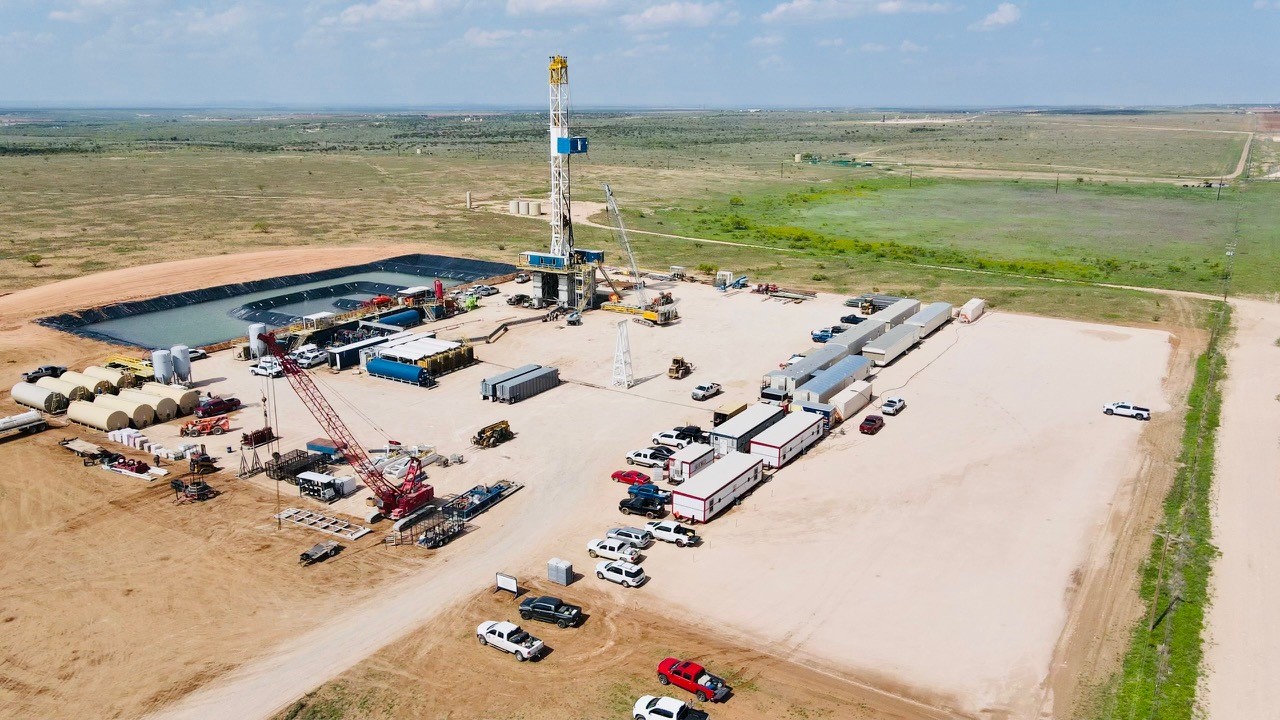
Why Texas Remains One of the Strongest Places to Invest in Oil Wells
Texas continues to stand out for several reasons:
-
Established Infrastructure: With decades of oil and gas activity, pipelines, refineries, service companies, and skilled labour are already in place.
-
Diverse and Productive Basins: The Permian Basin, Eagle Ford, Barnett, Gulf Coast all offer different risk/return profiles. Texas’ multiple plays mean you can choose alignment with your risk tolerance.
-
Clear Legal Framework for Mineral Rights: Texas law provides strong protection for mineral rights owners and clarity in leasing and property issues.
-
Large-Scale Production: Texas remains the largest oil-producing U.S. state. For example, in March 2025, Texas produced 121.36 million barrels of crude oil (≈3.91 million bbl/day) from 157,192 oil wells.
-
Competitive Service Environment: Numerous operators and service companies mean competitive costs, innovation in drilling/fracturing, and improvement in recovery factors.
-
Strategic Location: Proximity to Gulf Coast export terminals, refineries, and infrastructure means favorable market access and logistics.
Together, these factors make Texas among the more reliable and transparent U.S. markets for oil-and-gas investments, though not risk-free.
Conclusion
Investing in oil wells in Texas offers a compelling combination: strong return potential, income generation, tax advantages, and access to tangible energy assets. But it’s not a passive, “set-and-forget” opportunity, it requires careful diligence, clarity on structures, risk awareness, and ongoing monitoring.
If you’re considering direct oil investments in Texas, take the time to review field data, drill-down into the lease and legal terms, and work only with credible operators. If done thoughtfully, such investments can deliver income, growth, and meaningful tax benefits.
Frequently Asked Questions
What’s the difference between royalty interest and working interest in Texas oil wells?
A working-interest owner shares both revenue and costs (drilling, completion, operations). A royalty owner receives income from production but doesn’t pay for the operations.
Do I need to be an accredited investor?
Many private oil-well offerings (especially for new drilling) are limited to accredited investors. Some mineral/royalty purchases may be open to non-accredited buyers—but check the offering specifics.
How soon can I expect returns?
Producing wells may start paying within months of acquisition. New drilling projects may take a year or more, depending on drilling/completion schedule and time to production.
What are typical minimum investment amounts?
They vary widely. Some working-interest opportunities may require tens or hundreds of thousands of dollars; royalty/mineral-interest pools may require less. Always check project minimums.
How are taxes handled in Texas?
Investors may benefit from deductions like IDCs (100% write-off in many cases), TDCs, depletion allowances, and immediate deduction of operating costs. Texas has no personal income tax, though severance, property and lease taxes apply.