
Introduction
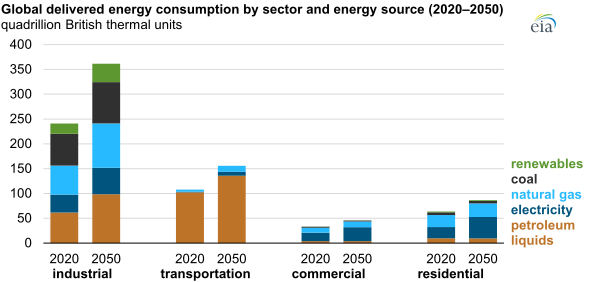
Global energy is changing fast, but oil and gas remain essential. Demand forecasts show how investing in oil and gas wells will stay relevant for decades even as the world moves towards renewable energy. For investors, this creates both necessity and volatility, leading to good returns.
Today, investors have more ways to invest in oil wells than before. These range from direct drilling projects to energy funds. Understanding these options and the risks tied to each, will help investors choose how to position themselves in a sector that still powers much of the world.
Why Investors Choose Oil Well Investment Opportunities
Oil well investments continue to attract interest because they situate real assets with continuing worldwide demand and the possibility of robust profits.
-
High Profit Potential: Some investors consider investing in oil and gas wells to be attractive due to greater profit potential when energy prices spike.
-
Tax Benefits: The industry offers unique tax benefits that allow large write-offs in the first year.
-
Portfolio Diversification: By offering alternatives to conventional stocks and bonds, investing in Texas oil wells or similar projects can help balance an investment portfolio.
-
Protection against Inflation: Investments in commodities like oil wells gain value as prices rise.
-
Persistent Worldwide Need: Despite the growth of renewable energy sources, oil and gas are still in demand.
-
Supported by Tangible Assets: Oil well investments are tied to land, rigs, and equipment, offering stability and long-term value.
-
Alternatives for Various Investors: The sector has both passive and active investment options.
-
Regular Income Opportunities: Certain investments provide steady cash flow.
Ways to Invest in Oil and Gas Wells
Investors when investing in oil and gas wells often choose between two paths: direct and indirect. Each option offers different levels of involvement, potential rewards, and risks. The right choice depends on an investor’s goals, resources, and comfort with risks. Oil well investment opportunities come in many forms, but the first step is to study the different approaches before choosing one.
Direct Oil Well Investment Opportunities
Direct investment in oil wells allows investors to invest money directly into drilling and production. Investing in oil and gas wells provides potentially higher returns but also comes with higher risk, which is only practical for those with significant prior experience and who are accredited investors.
Working Interest Ownership
Owning part of an oil well means investors share both the profit it makes and the costs required to run it. Experts usually suggest this for accredited investors who want an active role and can handle high risks, including investing in Texas oil wells where established drilling operations are common.
Direct Participation Programs (DPP)
Direct Participation Programs are pooled investment arrangements managed by professionals. This allows individuals to participate in oil projects without direct operational responsibility. These programs combine limited liability with access to attractive oil well investment opportunities.
The benefits of direct participation make this an appealing middle ground between high-risk ownership and passive investments.

Indirect Oil Well Investment Opportunities
Investors looking for less risky options and minimal hands-on work can invest through indirect oil well investments. This lets them access the energy industry without running drilling or operations themselves. These opportunities contrast with the benefits of direct participation because they don’t offer the same tax advantages or direct asset ownership.
Master Limited Partnerships (MLPs)
MLPs are publicly listed companies operating midstream ventures like transportation and storage. They suit income-oriented investors seeking structured and relatively stable oil well investments.
Oil and Gas Royalty Trusts
Oil and gas royalty trusts are funded with royalties received from the production of oil, whereby no operating costs are incurred. Royalty trusts appeal to passive income investors, similar to MLPs and are designed to provide exposure to shifts in commodity prices.
Energy Sector ETFs and Mutual Funds
ETFs and mutual funds focused on energy give exposure to many oil and gas companies or commodity markets. Energy ETFs appeal to people because they’re easy to buy and sell, and small investors can access them.
Oil and Gas Company Stocks
Purchasing shares in exploration, transportation, or refining companies provides flexible, liquid exposure to oil well investments.
Investor Eligibility for Oil Well Investment Opportunities
Investor access varies by qualifications, capital, and risk capacity:
|
Investor Type |
Eligibility Criteria |
Investment Options |
|
SEC-defined: $200k individual income / $300k joint, $1M+ net worth, or licenses |
Private placements, drilling programs, direct working interests (high risk, high return) |
|
|
Non-Accredited Investors |
Must qualify under SEC Reg D 506(b) |
Limited private offerings (rare and risky) |
|
High Net-Worth Individuals |
Substantial personal capital |
Direct royalties, private equity, joint ventures |
|
Institutional Investors |
Large-scale funds (pension, PE, insurers) |
Infrastructure projects, large-scale oil exploration joint ventures |
|
Corporate/ Joint Venture Partners |
Major corporations pooling capital and expertise |
Joint ventures in exploration and production |
|
General Public |
Anyone with a brokerage account |
Public energy stocks, ETFs, mutual funds (affordable, liquid, lower risk) |
Important Things to Consider Before Investing in Oil and Gas Wells
Carrying out a thorough analysis that tests for possible opportunities in investing in oil and gas wells is critical for productivity. In addition to the visible profits, you should carefully consider the less visible factors that will allow you to enter the market in an informed manner.
Market Trends
Understand how global demand growth (~0.7 mb/d in 2025), supply expansion (~1.8 mb/d), and the energy transition (EVs displacing ~5 mb/d by 2030) influence oil prices, which is critical for maximizing oil well investment yield.
Technical & Geological Evaluation
Review the geological quality of a site, estimated reserves and expected production figures. When the technical fundamentals are strong, you can often expect better outcomes when investing in oil and gas wells.
Operator Expertise
The operator’s reputation, track record, and experience can greatly impact results. A good operator will make direct investments in oil wells more reliable as they manage the project efficiently.

Financial Structure
Verify if the investment structure is direct ownership, partnerships, or trusts, is evident, financially viable, and consistent with your personal goals.
Liquidity Profile
Examine how quickly the investment can actually be converted to cash. Some oil well investment opportunities offer cash flow regularly, while others may require a longer commitment.
Regulatory Environment & Tax Implications
Know the environmental rules and tax incentives linked to oil and gas well investments, where attractive after-tax returns can be influenced by rising carbon taxes and ESG compliance trends.
Professional Guidance
Discuss investing in oil wells with experts in the field and finance to grasp technical information and see how the investment fits your plan. Having this discussion often helps you make smarter choices when putting money into oil wells.
Potential Risks of Oil Well Investment Opportunities
Investing in oil and gas wells returns can be high, but so are the oil and gas investment risks. Oil prices can swing sharply. New laws or policies can raise costs. Equipment failures and drilling issues may arise. Furthermore, geopolitical risks like wars, sanctions, and trade disputes can affect the investment.
When you are considering investing, you have to consider who’s running the oil wells, diversify, and consider what you are going to do with your money. By balancing both opportunity and risk, you’ll be able to maximize your oil well investment opportunities while minimizing the things that are uncertain.
FAQs
How risky is investing in oil and gas wells compared to other assets?
Oil and gas well investments carry higher risks due to price fluctuations in the market, operational issues, and regulatory issues. However, they also offer unique tax benefits and diversification.
Can beginners start investing in oil wells, or is it only for experts?
Yes, but new investors might also consider indirect oil well investment options like ETFs, mutual funds, or shares of energy companies. These are safer and more accessible entry points. Direct investments, like drilling programs, require skills and qualifications which are better for experienced, accredited investors.
How does the global energy transition impact investing in oil and gas wells?
While renewables are growing, oil and gas demand remains strong. Oil and gas will still be around for transportation, industrial, and infrastructure continuity. Demand may slowly fall off entirely over time, but energy price variability creates investment cycles (profits) to be earned along the way. Indirect investments in oil wells via MLPs, or royalty trusts, are a way for investors to have the current economic/energy upside while hedging against future uncertainty.
What kind of returns can I realistically expect from investing in oil wells?
The return on investment in oil wells can be quite variable. Investments that have direct exposure to drilling projects might yield the potential for far greater profits or losses, but can lead to high risk. On the other hand, indirect investments such as Exchange-traded Funds (ETFs) or royalty trusts yield consistent but relatively small returns, but allow liquidity as needed. Investors can enter oil well investment opportunities with excitement and caution since returns depend on the whims of other forces beyond their control.